Back to Catalog
Pharmaceutical Chemistry
Paracetamol
Paracetamol (pharmaceutical substance) is a highly effective, pure analgesic and antipyretic (fever reducer) agent acting as a core active pharmaceutical ingredient (API) for the production of a wide range of medications. The product is a white or almost white crystalline powder, odorless. Due to its proven safety profile, chemical stability, and excellent compatibility with other active ingredients (such as ibuprofen, caffeine, and ascorbic acid), Paracetamol is an indispensable raw material for creating stable and effective formulations in the modern pharmaceutical industry.
Applications
Production of Solid Dosage Forms: Serves as the primary active ingredient in the formulation of classic and effervescent tablets, capsules, as well as fast-dissolving powders and granules for the treatment of colds and flu.
Production of Liquid and Soft Forms: Used as a key component in pediatric suspensions, syrups for fever and pain relief, and rectal suppositories due to its good bioavailability.
Combination Medications: Widely utilized in multi-component medicines (combined with antispasmodics, antihistamines, and vasoconstrictors) for comprehensive therapy.
Veterinary Medicine: Finds limited and strictly dosed application in the manufacture of specialized veterinary drugs for livestock (under strict formulation control).
Key Advantages
High Therapeutic Efficacy: Rapidly and targetedly blocks cyclooxygenase (COX) in the central nervous system, providing a pronounced antipyretic and analgesic effect within the first hours after administration.
High Purity and Safety: The product strictly complies with international quality standards (BP/USP/EP) and minimizes the risk of gastrointestinal side effects (unlike NSAIDs), making it safe for children and the elderly.
Stability and Processability: The powder possesses optimal flowability and a stable particle size distribution (micronized or standard grade), which significantly facilitates direct compression and granulation processes in manufacturing.
Pharmaceutical Compatibility: Blends excellently with most classic excipients (microcrystalline cellulose, lactose, starch), allowing for easy adjustment of the active substance's release rate.
Storage & Transportation
- Store in dry, clean, cool warehouse facilities protected from light, in tightly closed original packaging, away from heat and moisture sources.
- Recommended storage temperature: +15°C to +25°C (in a dry place). Avoid sudden temperature fluctuations that may lead to condensation.
- Store in an isolated area dedicated to pharmaceutical substances, completely excluding contact with strong oxidizing agents and corrosive chemicals.
- Transportation is permitted by all modes of covered transport, provided that the temperature regime is maintained and the product is protected from atmospheric precipitation. The product is not classified as a dangerous good (under ADR regulations). Shelf life — 3 to 5 years from the date of manufacture (depending on the manufacturer's specific specification).
Technical Specifications
Appearance
White or almost white crystalline powder, odorless, with a slightly bitter taste.
Assay (Active Substance)
99.0% – 101.0% (on dried basis)
Melting Point
168°C – 172°C
Loss on Drying
max 0.5%
Sulfated Ash
max 0.1%
Heavy Metals
max 0.001% (10 ppm)
Organic Impurities (p-aminophenol)
max 0.005%
Supply info
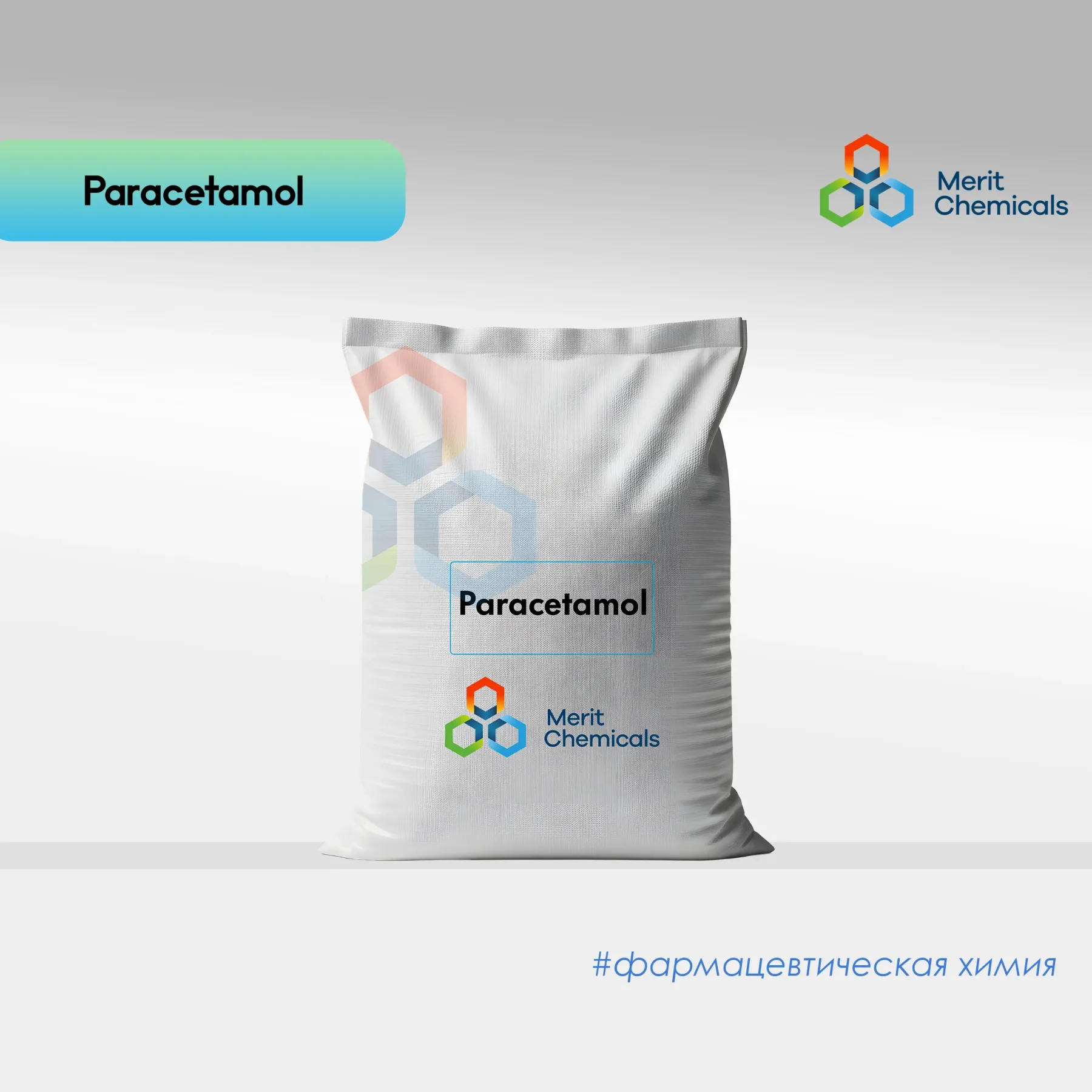
- Multi-layer paper bags with a secure, airtight inner polyethylene liner — 25 kg.
- Fiber drums (cardboard winding drums) for large-scale industrial manufacturing — 25 kg / 50 kg.
- Custom packaging/repacking into individual containers is available upon agreement with the customer.