Back to Catalog
Pharmaceutical Chemistry
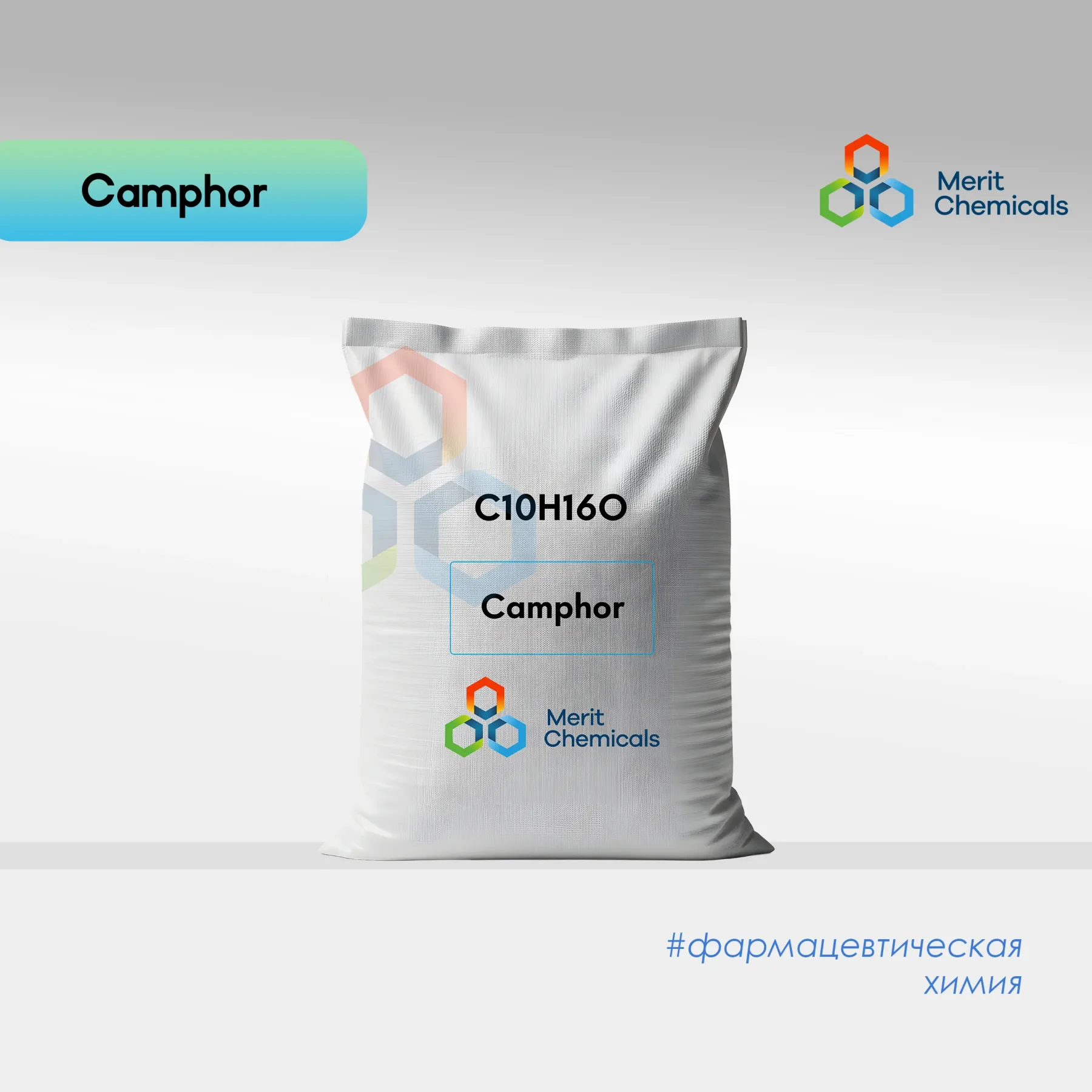
Camphor
Formula:
C10H16O
GOST/CAS:
CAS 76-22-2 / ГОСТ 11235-75
Camphor (2-oxobornane) is an organic compound belonging to the terpenoid class, appearing as white or translucent crystalline pieces or powder with a characteristic strong, penetrating odor. In the industrial sector and construction chemistry, camphor is highly valued as an effective plasticizer, water repellent, and component for the formulation of various polymer and paint compositions. It features excellent solubility in organic solvents and oils, as well as the ability to modify the physical and mechanical properties of polymer matrices.
Applications
Production of Construction Chemicals: Used as a modifying additive and plasticizer in the manufacturing of specialty varnishes, paints, drying oils, and polymer coatings, improving their elasticity and adhesion.
Plasticizer for Celluloid and Plastics: Traditionally utilized in the chemical industry for the plasticization of cellulose nitrate (celluloid), explosives, and various types of plastics.
Formulation of Specialty Compounds: Included in soldering fluxes, certain types of technical lubricants, as well as hydrophobic and antifungal impregnations for building materials.
Chemical Synthesis: Serves as an essential raw material for the synthesis of other organic compounds, fragrances, and technical chemical components.
Key Advantages
High Plasticizing Efficiency: Effectively reduces the brittleness of polymer and paint films, ensuring durability and resistance to cracking in finished coatings.
Excellent Compatibility: Easily blends with many organic resins, cellulose ethers, solvents, and oils, enabling the creation of stable, homogeneous formulations.
Antiseptic and Hydrophobic Properties: Imparts a mild water-repellent effect to materials and reduces the risk of mold or fungal growth on treated surfaces.
Consistency of Characteristics: A high-purity product ensures predictable performance in technological processes and long-term retention of end-product properties.
Storage & Transportation
- Store in dry, cool, and well-ventilated warehouse facilities in tightly closed original packaging, away from heat sources, open flames, and direct sunlight.
- Given the product's volatility and flammability, storage areas must comply with fire safety regulations for the storage of flammable solids.
- Transportation is permitted by all modes of covered transport in accordance with the regulations for the carriage of dangerous goods (classified as a flammable solid, UN 2717). Shelf life is 1 year.
Frequently bought together
Technical Specifications
Appearance
White or colorless crystalline pieces, powder, or granules with a characteristic odor
Assay (Main Substance)
min. 96.0% – 98.0%
Melting Point
174.0 – 179.0 °C
Specific Rotation (for optically active forms)
+41° to +44° (or ±2° for synthetic grade)
Moisture Content / Residue on Evaporation
max. 0.1%
Solubility
Freely soluble in alcohol, ether, chloroform, fatty and essential oils; very slightly soluble in water
Supply info
- 25 kg paper-plastic or woven polypropylene bags with an inner polyethylene liner.
- 25 kg cardboard drums or corrugated boxes with a sealed inner bag (subject to agreement with the customer).