Back to Catalog
General Chemistry
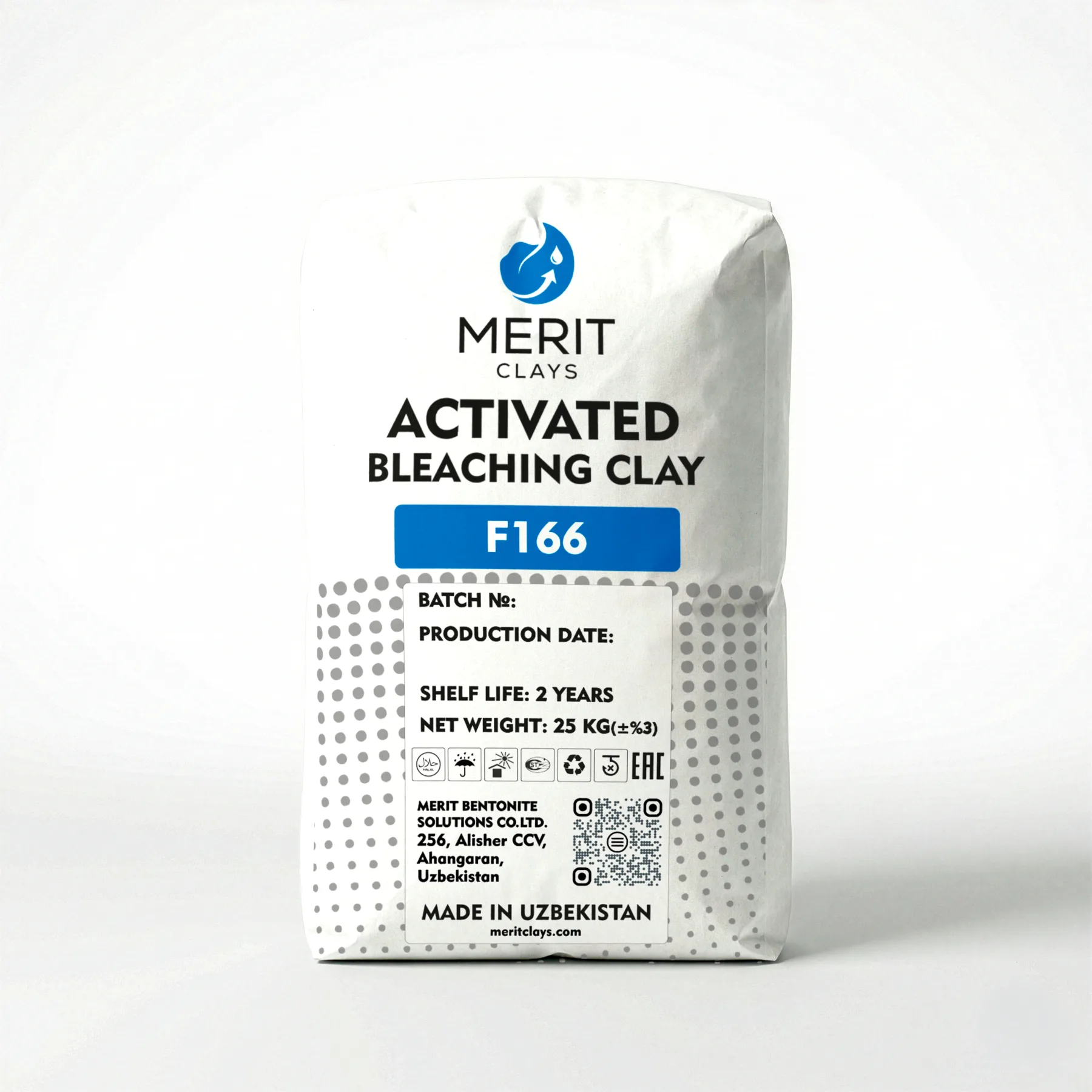
Bleaching clay
Formula:
Al₂O₃ ⋅ 2SiO₂ ⋅ 2H₂O.
GOST/CAS:
CAS 70892-59-0 / ГОСТ 32313-2013
Bleaching clay (Activated Bentonite) is a highly efficient natural sorbent based on montmorillonite, which undergoes thermal and acid activation to maximize its porosity and specific surface area. The product is a fine powder ranging in color from white to light gray or cream. Due to its exceptional adsorption properties, bleaching earth is indispensable in the processes of refining, decolorization (bleaching), and purification of vegetable oils, animal fats, as well as mineral and technical petroleum products from pigments, gums, and impurities.
Applications
Food Industry and Oil Refining: Used as the primary agent for bleaching (decolorization) of sunflower, soybean, rapeseed, palm, and other vegetable oils. It effectively removes carotenoids, chlorophyll, phospholipids, and residual soaps.
Petroleum Refining and Technical Oils: Applied for the purification and regeneration of industrial, motor, and transformer oils, as well as paraffins. It removes resinous compounds, sulfur, and oxidation products, extending the service life of lubricants.
Cosmetology and Pharmacy: Included in the formulation of cleansing masks, pastes, and creams as a deep sorbent to remove excess sebum and toxins. It serves as a base for certain dermatological preparations.
Ecology and Wastewater Treatment: Used as an efficient filtration material for the adsorption of heavy metals, radionuclides, and organic pollutants from industrial wastewater.
Key Advantages
High Selective Adsorption: The porous structure of the material specifically binds unwanted pigments (chlorophyll, carotene) and phosphatides without altering or degrading the beneficial fatty acid composition of the oils.
Optimal Filterability: The particle size distribution is tailored to ensure high filtration rates on frame and disc filters, minimizing oil retention losses in the filter cake.
Stability and Safety: It does not undergo undesirable chemical reactions with the product being purified, is completely removed during the filtration process, and guarantees the radiological and toxicological safety of the final product.
Eco-Friendliness: The product is of natural origin. The spent earth (cake) is biodegradable and, in many industries, can be recycled as a component for brick manufacturing or fertilizer production.
Storage & Transportation
- Store in dry, covered, and well-ventilated warehouse premises in the tightly closed original packaging.
- Avoid direct contact with water and humid air, as the product is highly hygroscopic (it actively absorbs moisture from the environment, which reduces its adsorption capacity).
- Recommended storage temperature range: from -30°C to +40°C. Keep away from aggressive chemicals and strong odors.
- Transportation is possible by all types of covered transport (road, rail) in compliance with cargo transportation regulations. The material is not classified as dangerous goods (non-hazardous under ADR). Shelf life is 2 years from the date of manufacture, subject to the integrity of the hermetic packaging.
Frequently bought together
Technical Specifications
Appearance
Fine light powder
Humidity
8-12%
Free acidity
max 0.4%
Specific surface area
150-250 m²/g
Bulk density
600-800 g/l
pH (10% aqueous suspension)
2.5 - 4.5 (for acid-activated) / 6.5 - 8.5 (neutral)
Supply info
- Industrial Packaging: Multi-layer paper or kraft bags with a polyethylene inner liner of 25 kg on pallets.
- Bulk Wholesale: Flexible intermediate bulk containers like Big-Bags weighing 500 kg and 1000 kg.
- Laboratory Series: Hermetically sealed pouches of 1 kg / 5 kg for pilot-plant and laboratory testing.