Back to Catalog
General Chemistry
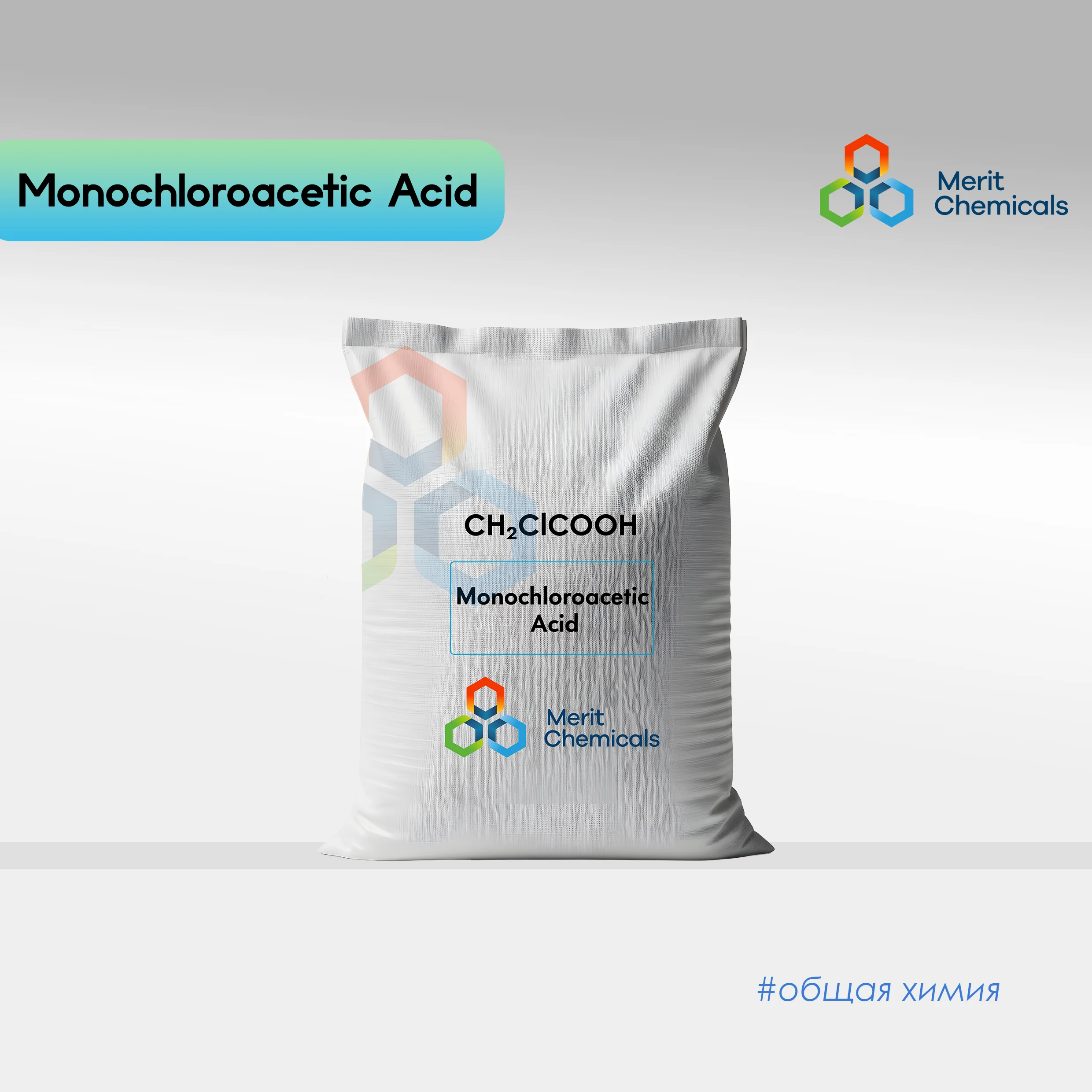
Monochloroacetic Acid (MCAA)
Formula:
CH₂ClCOOH
GOST/CAS:
CAS: 79-11-8
Monochloroacetic Acid (MCAA) is a highly reactive chemical compound appearing as colorless, hygroscopic crystals with a pungent odor. It serves as a vital intermediate in organic synthesis. Due to its high reactivity, MCAA is widely used as a base component for the production of Carboxymethyl Cellulose (CMC), pesticides, pharmaceuticals, and surfactants. The product features excellent solubility in water and organic solvents, making it indispensable in modern fine organic synthesis processes.
Applications
CMC Production: The primary raw material for manufacturing Carboxymethyl Cellulose, used in oil drilling and the food industry.
Agrochemicals: Synthesis of herbicides (such as 2,4-D) and other plant protection agents.
Pharmaceuticals: Production of vitamins (e.g., Vitamin B6) and various synthetic medications.
Personal Care: Manufacturing of amphoteric surfactants (betaines) for shampoos and cosmetic products.
Key Advantages
High Purity: Minimal dichloroacetic acid content ensures the stability and efficiency of chemical reactions.
Versatility: A wide range of applications spanning from petrochemistry to the cosmetics industry.
High Reactivity: Allows for synthesis at moderate temperatures with high yields of the final product.
Storage & Transportation
- Store in cool, dry, and well-ventilated warehouses.
- Keep away from direct sunlight and moisture.
- Transport in covered vehicles in compliance with hazardous goods regulations (Class 8).
Frequently bought together
Technical Specifications
Purity (Main Substance)
99.5% min
Melting Point
61–63°C
Appearance
White Crystals / Flakes
Dichloroacetic Acid Content
0.3% max
Supply info
- 25 kg bags
- 1000 kg Big-bags