Back to Catalog
Construction Chemistry
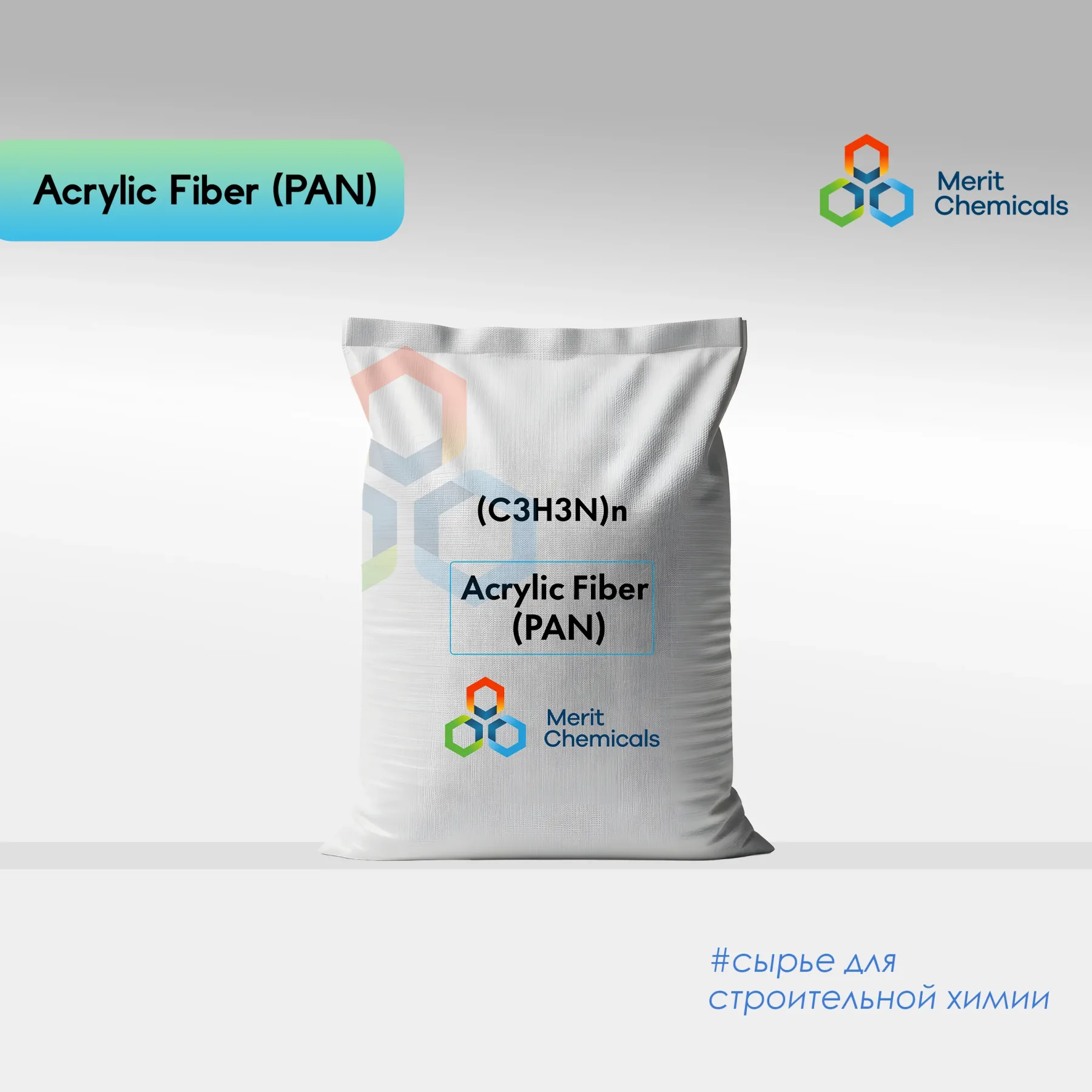
Acrylic Fiber (PAN)
Formula:
(C3H3N)n
GOST/CAS:
CAS 25014-41-9
Polyacrylonitrile (PAN) fiber is a high-strength synthetic microfiber derived from acrylonitrile polymers. The product consists of fine white or light-yellow threads specifically designed for the micro-reinforcement of dry building mixtures, concrete, and the production of composite materials. Thanks to its unique molecular structure, PAN fiber exhibits high tensile strength, excellent dispersibility in mixtures, and absolute resistance to the aggressive alkaline environment of cement mortars. The addition of acrylic fiber forms a three-dimensional reinforcing matrix that prevents the formation of microcracks during the shrinkage stage and significantly increases the durability of structures.
Applications
Construction mixtures and concrete: Micro-reinforcement of ready-mix concrete, floor screeds, shotcrete, and dry building mixtures (plasters, putties) to prevent shrinkage cracks.
Road construction: Addition to asphalt concrete mixtures to increase wear resistance, fatigue strength, and rutting resistance.
Composite materials: Use as an effective reinforcing component in the production of fiber cement boards, pipes, and roofing materials (asbestos replacement).
Industry: Application as a base precursor for the production of carbon fiber and high-temperature thermal insulation materials.
Key Advantages
Crack prevention: Effectively reduces the risk of microcracks during the plastic shrinkage of concrete (up to 90-95%) and increases its water resistance.
High chemical resistance: The material is absolutely resistant to alkalis, acids, and salts. The fiber does not dissolve or lose its strength in the aggressive environment of concrete.
Strength enhancement: Significantly improves the physical and mechanical properties of finished products, increasing impact resistance, abrasion resistance, and flexural strength.
Excellent dispersibility: The fibers are easily and evenly distributed throughout the volume of the building mixture without forming lumps and without requiring changes to water proportions.
Storage & Transportation
- Store in dry, covered, and well-ventilated warehouses in the original factory packaging.
- Protect from direct sunlight, atmospheric precipitation, and contact with open flame sources.
- Transportation is permitted by all types of covered transport, provided that cargo rules are observed and the packaging is protected from mechanical damage and moisture.
Frequently bought together
Technical Specifications
Density:
1.17 – 1.19 g/cm³
Fiber length:
6 mm, 12 mm, 18 mm (or custom upon request)
Tensile strength:
≥ 500 MPa
Melting point:
Decomposes at t > 250 °C (without melting)
Supply info
- Paper or polypropylene bags (10 – 20 kg).
- Cardboard boxes or FIBCs (big bags) on pallets wrapped in stretch film.