Back to Catalog
Construction Chemistry
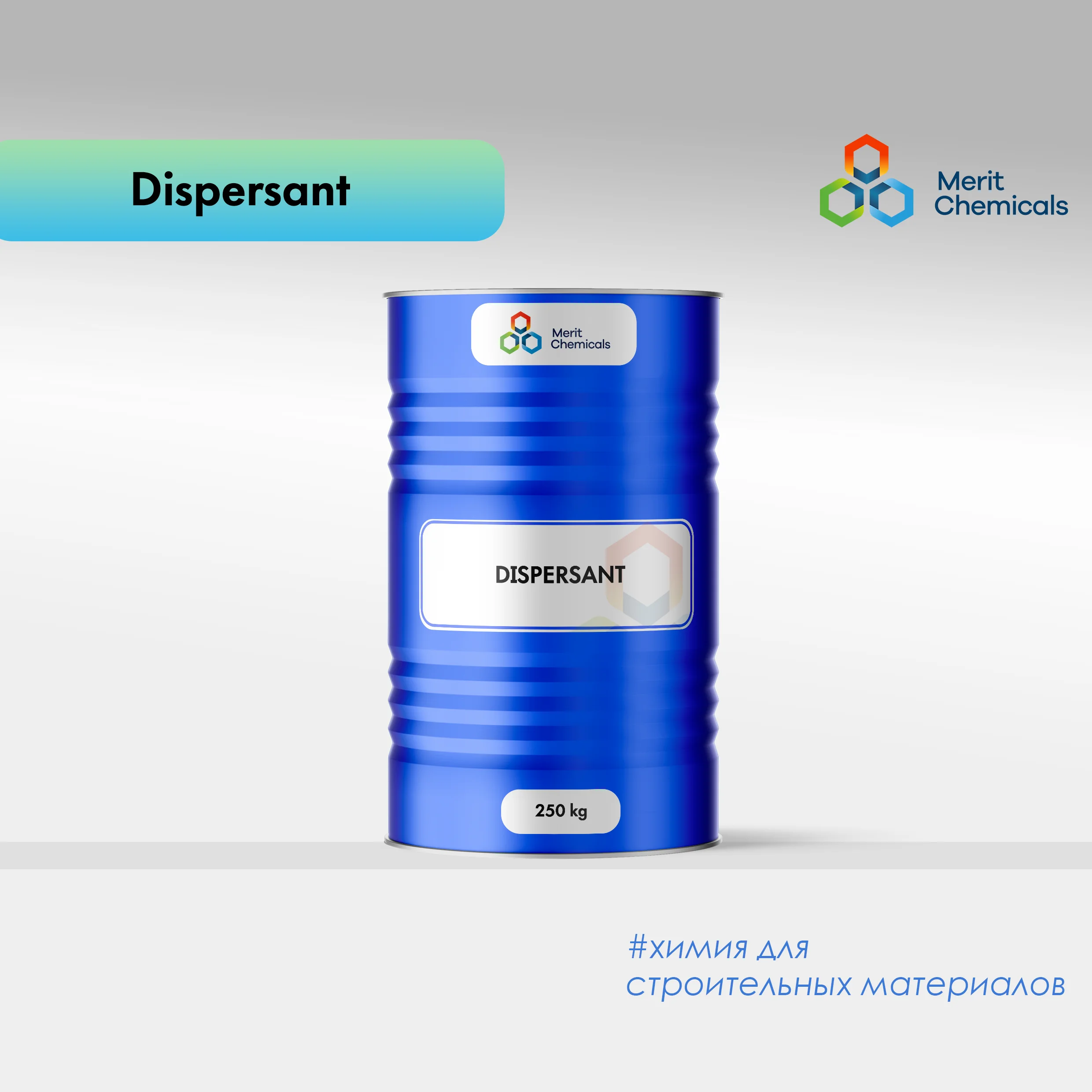
Dispersant
Formula:
[–CH₂–CH(COONa)–]ₙ
GOST/CAS:
CAS 9003-04-7
Dispersant (a highly effective anionic polymeric surfactant) is a specialized chemical component acting as a key agent for grinding, stabilizing, and evenly distributing solid particles within liquid media. The product comes as a homogenous liquid or powder and is highly soluble in water. Thanks to its ability to effectively reduce the viscosity of suspensions and prevent the agglomeration (clumping) of pigments and fillers, this dispersant is indispensable in the production of paints and coatings, construction chemicals, household detergents, and the pulp and paper industry.
Applications
Paints, Coatings & Polymers: Used as a base active component in the production of water-dispersible paints, varnishes, and primers. It ensures perfect pigment grinding, improves hiding power, and enhances color stability during storage.
Construction Chemicals: Acts as a plasticizer and superplasticizer for concrete mixes, cement mortars, and dry construction blends. It reduces water demand while increasing the strength and workability of the final mix.
Household & Industrial Detergents: Incorporated into the formulations of liquid detergents, washing powders, and cleaning pastes to prevent soil redeposition (re-settling of dirt) onto fabrics and surfaces.
Textile & Paper Industry: Applied for the dispersion of clay, chalk, and talc in paper manufacturing, as well as in textile dyeing processes to achieve maximum uniformity of the pigment layer.
Key Advantages
High Dispersing Efficiency: Effectively separates and stabilizes solid particles throughout the liquid volume, significantly reducing system viscosity even at high solid phase concentrations.
Stability & Compatibility: Maintains its properties across a wide pH and temperature range. It exhibits excellent compatibility with most anionic and non-ionic components, as well as organic and inorganic pigments.
Sedimentation Prevention: Blocks the processes of settling, separation, and caking of suspensions, thereby extending the shelf life and preserving the commercial appearance of the finished product.
Eco-Friendliness & Safety: The product is biodegradable, non-toxic at working concentrations, does not emit harmful volatile organic compounds (VOCs), and is safe for the environment when properly disposed of.
Storage & Transportation
- Store in dry, cool, and well-ventilated warehouses in tightly sealed original packaging, away from heat sources.
- Recommended temperature range: +5°C to +30°C. For liquid forms, do not allow the product to freeze.
- Avoid direct sunlight and moisture exposure (especially for the powder form, as the product is highly hygroscopic).
- Transportation is permitted by all modes of covered transport, provided temperature regulations are observed. The material is not classified as a dangerous good (non-hazardous, no UN class assigned). Shelf life is 1 year from the date of manufacture.
Frequently bought together
Technical Specifications
Appearance
Clear or slightly turbid liquid (aqueous solution) / White powder
Molecular Weight
~4,000 – 6,000 g/mol (optimized for dispersion)
Active Content
≥ 40.0% (for liquid form) / ≥ 92.0% (for powder)
Density (at 20°C)
1.25 – 1.35 g/cm³
pH (10% aqueous solution)
6.5 – 8.5
Dynamic Viscosity (at 25°C)
100 – 500 mPa·s
Supply info
- Industrial plastic IBC totes (1000–1200 kg) or plastic/metal drums (200–250 kg) for the liquid form.
- Multi-layer paper bags with a polyethylene inner liner (25 kg) for the powder form.
- Bulk delivery via road tankers is available for large wholesale orders.