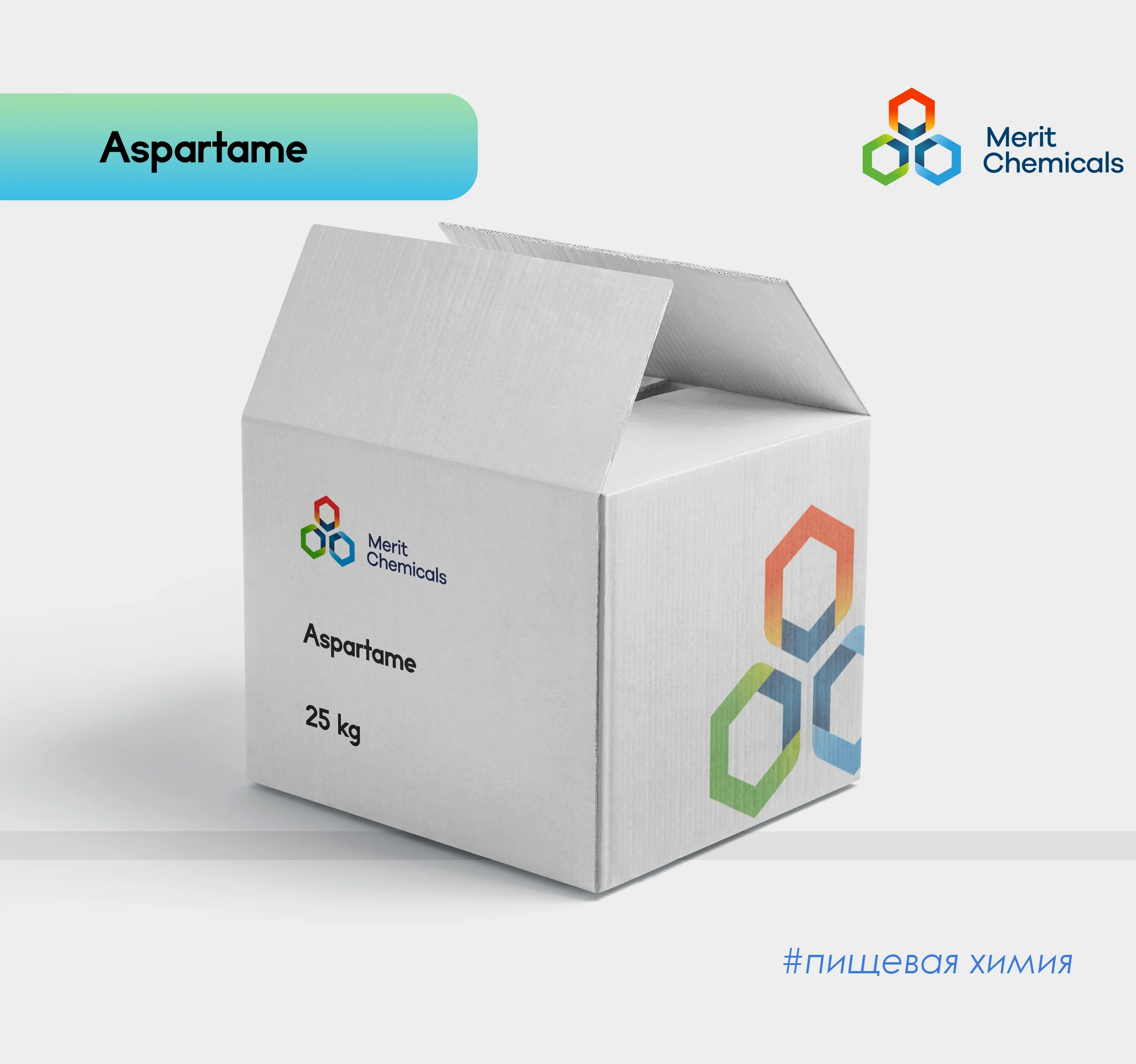
Aspartame
Aspartame (E951) is one of the most in-demand intense sweeteners, which is approximately 200 times sweeter than regular sugar (sucrose). It is a dipeptide composed of two amino acids: aspartic acid and phenylalanine, which naturally occur in many protein-rich foods. Due to its high sweetness intensity, minimal dosages of aspartame are required to achieve the desired taste, making the final product practically calorie-free. It has a clean sweetness profile, closely resembling sugar, without any foreign metallic or bitter aftertaste. The product is a white, odorless crystalline powder, highly soluble in water and slightly soluble in alcohol. It is important to note that aspartame is thermolabile and loses its sweetness upon prolonged heating, so it is not recommended for use in products that require baking.
Applications
Key Advantages
Storage & Transportation
- Store in a dry, cool, and well-ventilated warehouse environment. Keep the product tightly sealed in its original packaging, away from heat sources and direct sunlight.
- Optimal storage temperature range: +5°C to +25°C with a relative air humidity not exceeding 70%.
- Avoid co-storage with substances that emit strong or pungent odors, as the powder is highly prone to absorbing foreign aromas.
- Transport is permitted via all types of covered transport vehicles in compliance with standard regulations for food-grade cargo. The product is categorized as non-hazardous.
- Shelf Life: 2–3 years from the date of manufacture (subject to specific manufacturer warranties).
Frequently bought together
Technical Specifications
Supply info
- Industrial multi-layer kraft paper bags with an inner polyethylene liner, 25 kg net weight.
- Cardboard fiber drums (boxes) equipped with an inner protective plastic bag, 25 kg net weight.
- Bulk packaging in Big-Bag units (up to 500/1000 kg) is available upon individual request for large-scale industrial operations.