Back to Catalog
Food Chemistry
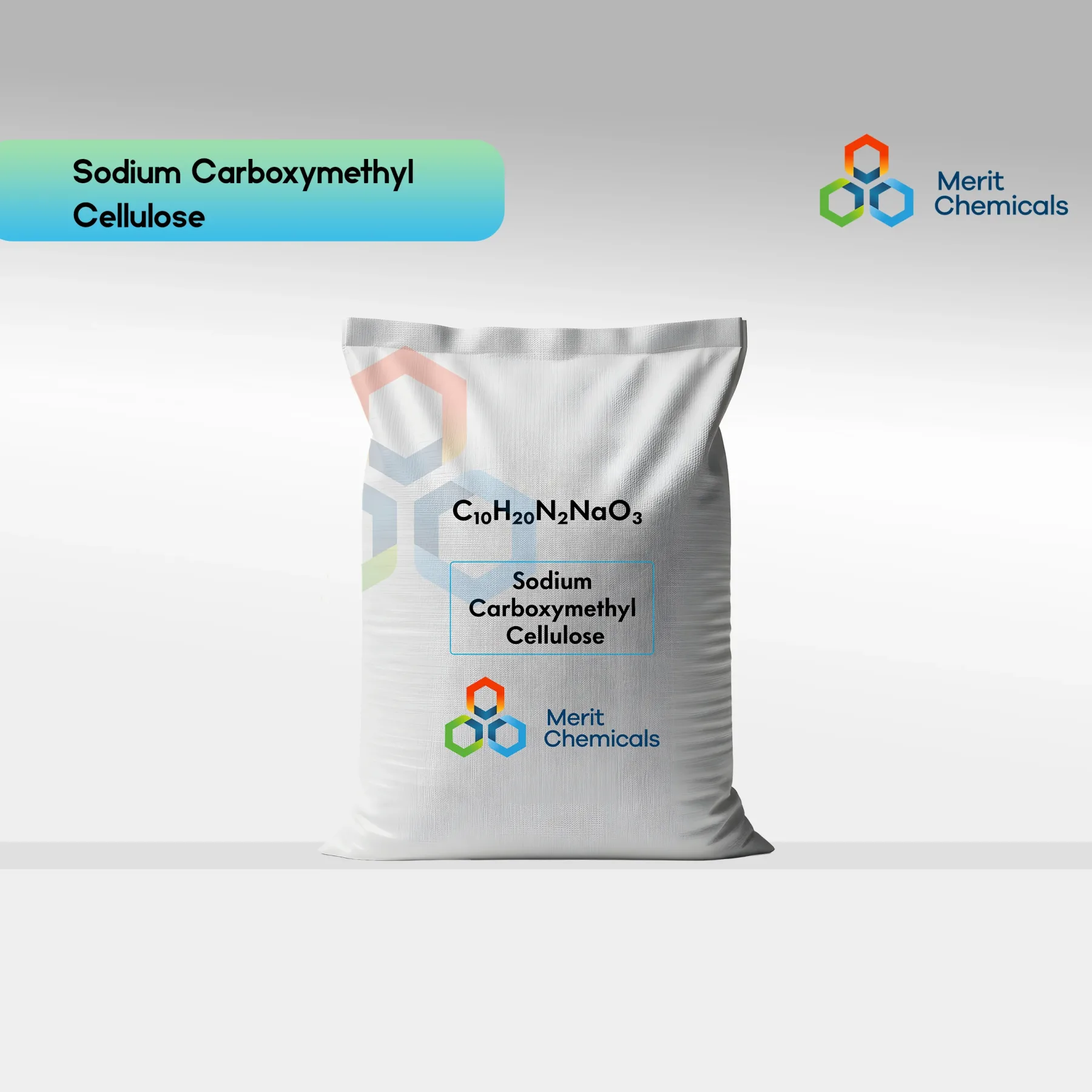
Sodium Carboxymethyl Cellulose
Formula:
C₁₀H₂₀N₂NaO₃
GOST/CAS:
CAS 9004-32-4 / ГОСТ 33781-2016
Sodium Carboxymethyl Cellulose (purified food-grade modification) is a highly efficient hydrocolloid that acts as a key agent for thickening, water binding, texture improvement, and structure stabilization in food systems. The product is a fine, free-flowing white to off-white powder, excellently soluble in both hot and cold water to form a clear, viscous colloidal solution. Due to its outstanding capacity to retain moisture and prevent syneresis (whey/water separation), Sodium CMC is an indispensable ingredient in dairy, bakery, confectionery, and sauce manufacturing.
Applications
Dairy Products and Ice Cream: Functions as a structural stabilizer in yogurts, creams, curd desserts, and ice creams. It prevents the formation of large ice crystals during freezing, provides a smooth, creamy mouthfeel, and maintains the shape of the melted product.
Sauces, Dressings, and Mayonnaises: Used as an effective thickener and emulsion stabilizer for mayonnaises, ketchups, salad dressings, and gravies. It ensures a uniform consistency, prevents phase separation (oil and water), and enhances the clinging properties of sauces.
Bakery and Confectionery: Added to dough and batters to optimize water retention, slow down the staling process, and prolong shelf life. In confectionery items (fondant, icings, fillings, pastes), it improves elasticity, shape retention, and prevents sugar crystallization.
Beverages and Pulpy Juices: Introduced into fruit-based beverages, nectars, and dietary drinks to build an appealing "body" (mouthfeel) and ensure the uniform suspension of pulp particles throughout the volume.
Key Advantages
Superior Water-Binding Capacity: Effectively absorbs and retains moisture within the food matrix, significantly minimizing the risk of syneresis (liquid separation) even during long-term storage or freeze-thaw cycles.
Excellent Stability and Compatibility: Maintains its functional properties (viscosity and texture) across a wide pH range (5.0 to 10.0) and during thermal processing (pasteurization, sterilization). It exhibits excellent synergy with other hydrocolloids (xanthan, guar, pectin) and sugars.
Texture Modification and Clean Sensory Profile: Alters the rheological behavior of food systems to yield a smooth, homogeneous texture without imparting any off-odor or foreign taste, thereby accentuating the natural flavor of the final product.
Safety and Purity: Food additive E466 is fully biodegradable, non-toxic, hypoallergenic, and globally approved for use in the food industry. It is not absorbed by the human body, acting instead as a beneficial dietary fiber.
Storage & Transportation
- Store in dry, cool, and well-ventilated warehouses in tightly sealed original packaging, away from heat sources and strong odoriferous substances.
- Recommended temperature range: +5°C to +25°C with a relative humidity not exceeding 70%. The product is hygroscopic; protect it against moisture ingress.
- Avoid exposure to direct sunlight.
- Transportation is permitted by all modes of covered transport in strict compliance with the required temperature regime. The material is categorized as non-hazardous. Shelf life — 2 years from the date of manufacture.
Technical Specifications
Appearance
Odorless and tasteless white to cream-colored granular powder or fibrous material.
Molecular Weight
~ 90,000 – 700,000 g/mol (optimized for the target viscosity level).
Purity (Dry Basis)
≥ 99.5%
Degree of Substitution (DS)
0.65 – 0.95
pH (1% Aqueous Solution)
6.5 – 8.5
Dynamic Viscosity (1% Sol. at 25°C)
500 – 5,000 mPa·s (depending on the grade: low, medium, or high viscosity).
Supply info
- Multi-wall paper kraft bags with a polyethylene inner liner of 25 kg net weight (standard packaging for powder form).
- Delivery on shrink-wrapped pallets weighing 1000 kg for bulk wholesale orders.