Back to Catalog
Food Chemistry
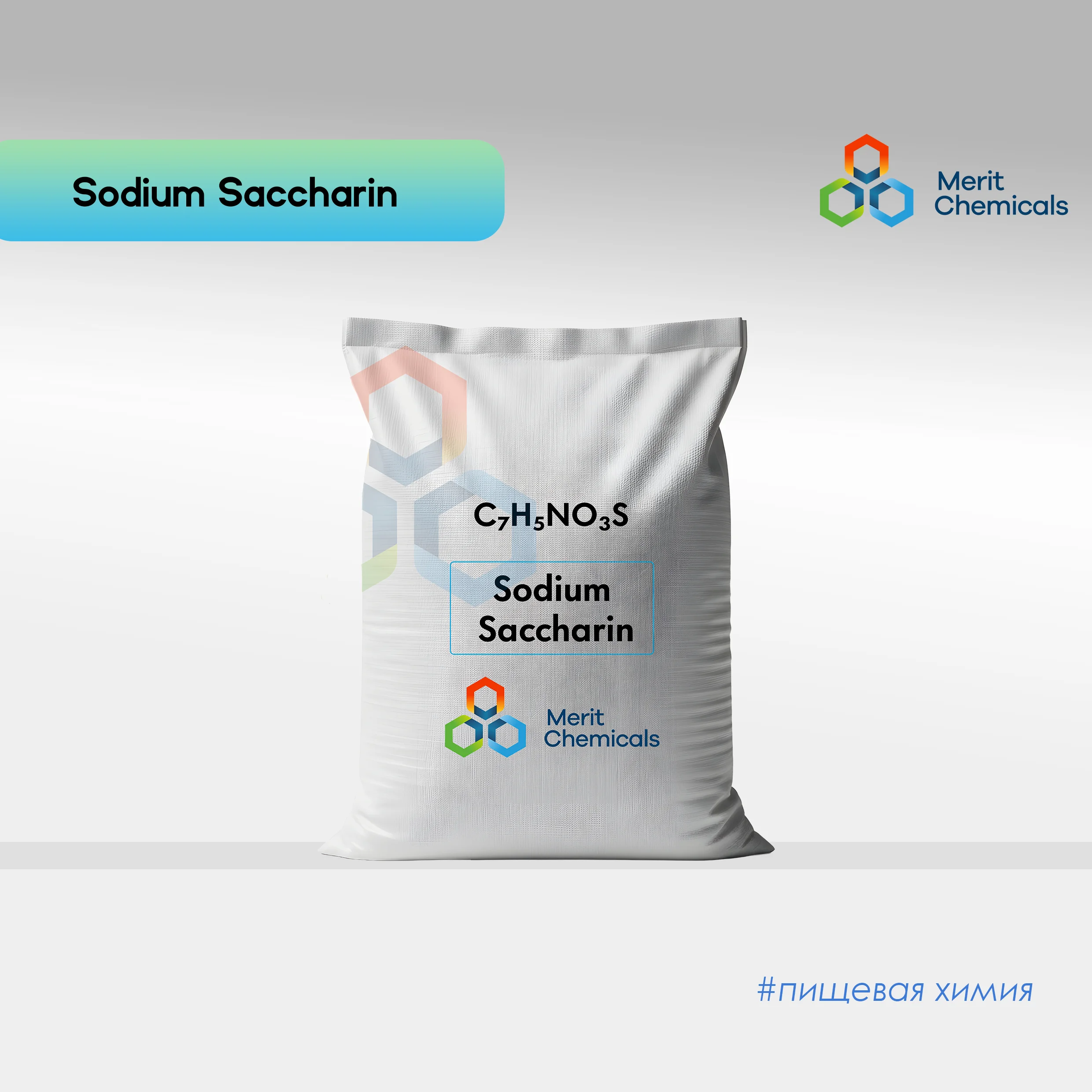
Sodium Saccharin
Formula:
C₇H₅NO₃S
GOST/CAS:
CAS 128-44-9 / ГОСТ Р 54618
Sodium Saccharin is one of the oldest and most thoroughly studied artificial sweeteners. The product is a white crystalline powder that is 300–500 times sweeter than sugar, yet contains virtually no calories and does not affect blood glucose levels. Saccharin features high thermal stability (withstanding heat up to 150°C), making it indispensable in the production of baked goods and confectionery. It dissolves easily in water and alcohols. In the food industry, it is often used in blends with other sweeteners (such as cyclamate) to mask the slight "metallic" aftertaste characteristic of the pure substance.
Applications
Food Industry and Beverages: Used as a baseline sweetener in the production of carbonated and still non-alcoholic drinks, juices, nectars, and fruit or vegetable preserves. It delivers a stable sweet taste without adding extra calories.
Dietary and Health Food Production: Incorporated into the formulations of specialized food products for diabetics and individuals managing their body weight. Used to formulate tabletop intensive sweetening blends in the form of tablets, powders, and liquid drops.
Pharmaceuticals and Medicine: Extensively applied to mask the unpleasant or bitter taste of active ingredients in cough syrups, effervescent and chewable tablets, cold remedy powders, and pediatric vitamin formulations.
Cosmetics Industry: Included in oral hygiene products (toothpastes, mouthwashes, breath-freshening sprays). It provides a pleasant taste while remaining completely non-cariogenic (it does not serve as a nutrient medium for plaque-forming bacteria).
Key Advantages
High Economic Efficiency: Due to its immense sweetening power, minimal dosages of saccharin can entirely replace large volumes of sugar, significantly lowering the production costs of the final product.
Thermal and Chemical Stability: The product maintains its sweet taste profile and chemical structure during high-temperature processing (pasteurization, sterilization, baking) and remains stable across a wide pH range (both in acidic and neutral environments).
Safety and Dietary Value: It is not metabolized by the body, possesses zero calories, and has no effect on blood glucose levels. Fully evaluated and approved for food industrial application by major international regulatory bodies (JECFA, EFSA).
Excellent Compatibility and Synergy: Easily dissolves in water and liquid media. Combines exceptionally well with other intensive sweeteners (such as cyclamates and aspartame), which helps achieve an optimized taste profile and a pronounced synergistic sweetening effect.
Storage & Transportation
- Store in dry, cool, and well-ventilated warehouses in tightly sealed original packaging, far away from heat sources and moisture.
- Recommended temperature range: from +5 °C to +25 °C with a relative air humidity of no more than 75%.
- Avoid exposure to direct sunlight and proximity to substances with strong or pungent odors.
- Transportation is permissible by all types of covered transport vehicles in compliance with the rules governing food-grade cargo shipments. The material is not classified as a dangerous good. Shelf life is 3–5 years from the date of manufacture.
Frequently bought together
Technical Specifications
Appearance
White crystalline powder or granules, odorless
Molecular Mass
241.19 g/mol (for dihydrate form)
Assay (Main Substance)
≥ 99.0%
Solubility in Water (at 20°C)
Approx. 1000 g/L (freely soluble)
pH (10% aqueous solution)
6.0 – 7.5
Moisture Content
≤ 15,0%
Melting Point
226 – 230 °C
Supply info
- Multi-wall paper bags with an inner polyethylene liner containing 25 kg (for powder and granulated forms).
- Cardboard fiber drums or boxes containing 25 kg.
- Customized packaging formats can be arranged for large-scale wholesale consignments upon agreement with the customer.